Fire detection that meets the code and gets the NOC.
Conventional and addressable fire alarm systems designed to NFPA 72 and BS 5839 principles, installed by trained technicians and documented for Civil Defence, insurers and auditors.
Systems installed in textile units, rice mills, hospitals and schools.
Who it's for
Inside a Fire Alarm system
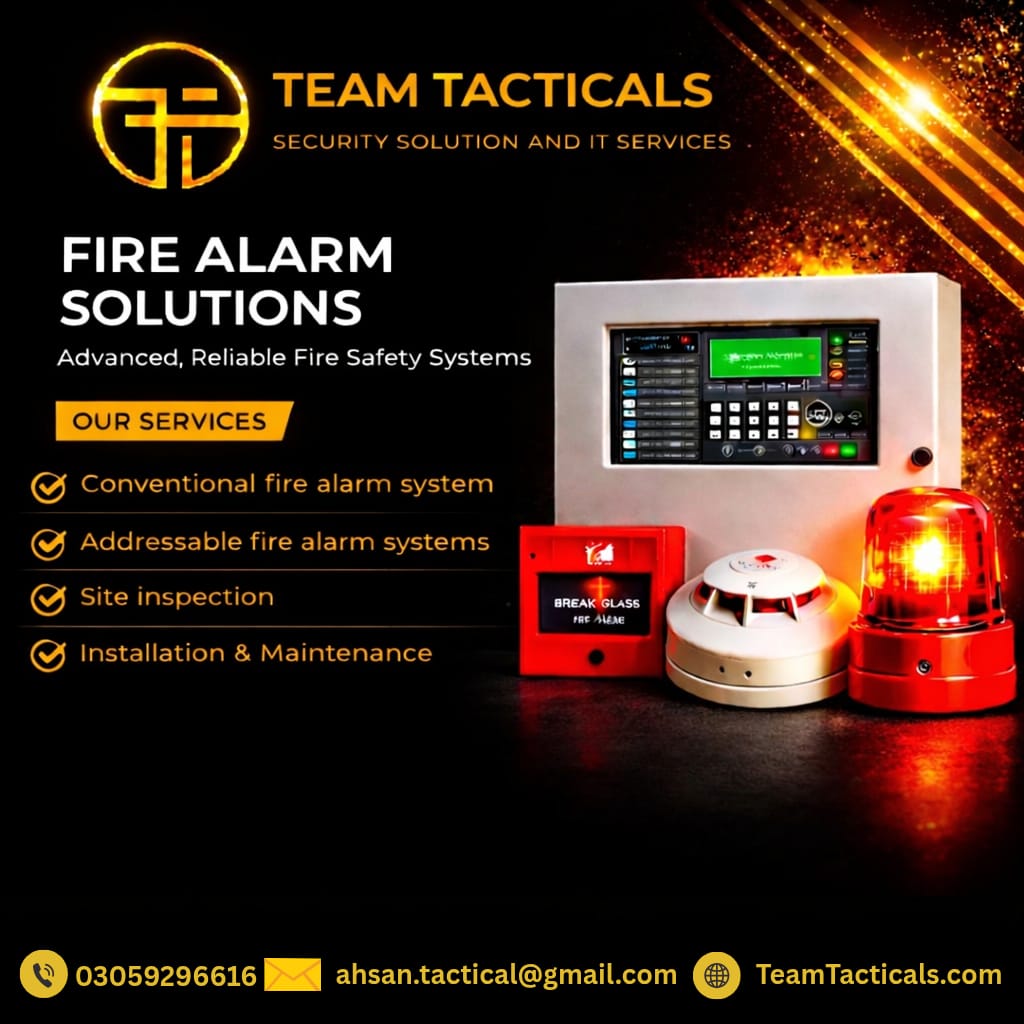
Conventional panels
2 to 32 zone panels for small and medium buildings. Reliable and economical.
Addressable panels
Each detector has an address so the panel shows the exact device in alarm. Right for hospitals, large factories and multi-floor buildings.
Detectors
Smoke, heat, multi-sensor, beam detectors for high ceilings, and flame detectors for hazardous areas.
Manual call points
Break-glass units at exits and along escape routes.
Sounders & strobes
Audible and visual alarms sized for the noise level of the space.
Fire-rated cabling
Fire-resistant cable and proper containment so the system keeps working in a fire.
Integration
Links to PA voice evacuation, access control door release, lift homing and BMS.
Testing & documentation
Cause-and-effect matrix, zone charts, commissioning certificate and log book.
How a Fire Alarm project runs
-
01
Site survey
Free visit. We walk the premises, note entry points, cable routes, power availability and what your insurer or building code requires.
1 day -
02
Design & BOQ
Camera or device placement drawing, bill of quantities with brand and model, itemised quote with no hidden costs.
2–3 days -
03
Installation
Certified technicians, neat conduit and trunking, labelled cabling, tested terminations.
2–10 days -
04
Commissioning & training
Every device tested, mobile app set up on your phones, staff trained, handover document signed.
1 day -
05
AMC & support
Optional annual maintenance with scheduled visits, priority response and spare-part stock.
Ongoing
Standards we design to
- Designed to NFPA 72 and BS 5839 principles
- Zone charts and cause-and-effect documentation supplied
- Battery standby calculated for 24 hours plus alarm
- Quarterly and annual test schedule under AMC
Conventional vs addressable
| Conventional | Addressable | |
|---|---|---|
| Locates alarm to | Zone (a floor or area) | Exact device |
| Building size | Small to medium | Medium to large, multi-floor |
| Cabling | Radial per zone | Loop, fewer cables |
| Expandability | Limited by zones | Add devices to the loop |
| Cost | Lower upfront | Higher upfront, lower to maintain |
Questions we get asked
Do I legally need a fire alarm in my factory or building?
Punjab building regulations, Civil Defence NOC requirements and most insurers require fire detection in commercial and industrial buildings. Requirements vary by occupancy and size. We advise on what applies to your building during the survey.
What is the difference between conventional and addressable?
A conventional panel tells you which zone is in alarm. An addressable panel tells you which exact detector. For a small shop, conventional is fine. For a hospital, multi-floor office or large mill, addressable saves critical minutes.
Can you integrate the fire alarm with my PA system and doors?
Yes. We commonly link the panel to voice evacuation messages, release access-controlled doors, and trigger the sounders across zones in sequence.
How often should the system be tested?
Weekly call-point test by your staff, quarterly service visit and an annual full test by us. AMC clients get this scheduled and logged.
Will the system false-alarm from dust or steam?
Not if the right detector is chosen. We use heat detectors in kitchens and dusty areas, beam detectors in high halls and multi-sensor devices where needed.
What happens during a power outage?
The panel runs on standby batteries sized for 24 hours plus 30 minutes of alarm. We size and test them at commissioning.
Do you provide documentation for the Civil Defence NOC or insurance?
Yes. You receive a commissioning certificate, zone chart, device schedule and a log book.
Can you upgrade an old or dead panel?
Yes. We often replace old panels while reusing sound wiring, or migrate to addressable in phases.
Do you also do fire extinguishers and suppression?
We supply extinguishers with the alarm system and partner for hydrant and gas suppression on larger projects.
Get a written quote for Fire Alarm
Tell us the basics and we will call to arrange the free survey. Or skip the form and WhatsApp us photos of the site.
Other solutions
Quote for Fire Alarm
Quote for Fire Alarm
Free, no obligation, about 45 minutes on site. Our engineer carries photo ID.